
Historic Diwali Gift to the Common Man: The 56th GST Council meeting, chaired by Union Finance Minister Smt. Nirmala Sitharaman, delivered a series of sweeping tax reforms designed to bring direct relief to the common man.
From cheaper insurance to reduced taxes on food, medicines, and household essentials, the reforms underline the government’s commitment to a citizen-first GST framework.
Historic Diwali Gift to the Common Man
The 56th GST Council meeting has been hailed as a Diwali gift for millions of Indians, bringing much-needed relief on essential goods, healthcare, and insurance. By easing the burden of everyday expenses, the reforms truly embody the spirit of celebration—offering financial comfort and a brighter future for households across the nation.
This landmark decision goes beyond tax cuts; it reflects the government’s commitment to building a citizen-first GST framework. From cheaper food and medicines to GST-free life and health insurance, the reforms ensure that prosperity reaches every corner of society, making this festive season one of hope, affordability, and inclusion.
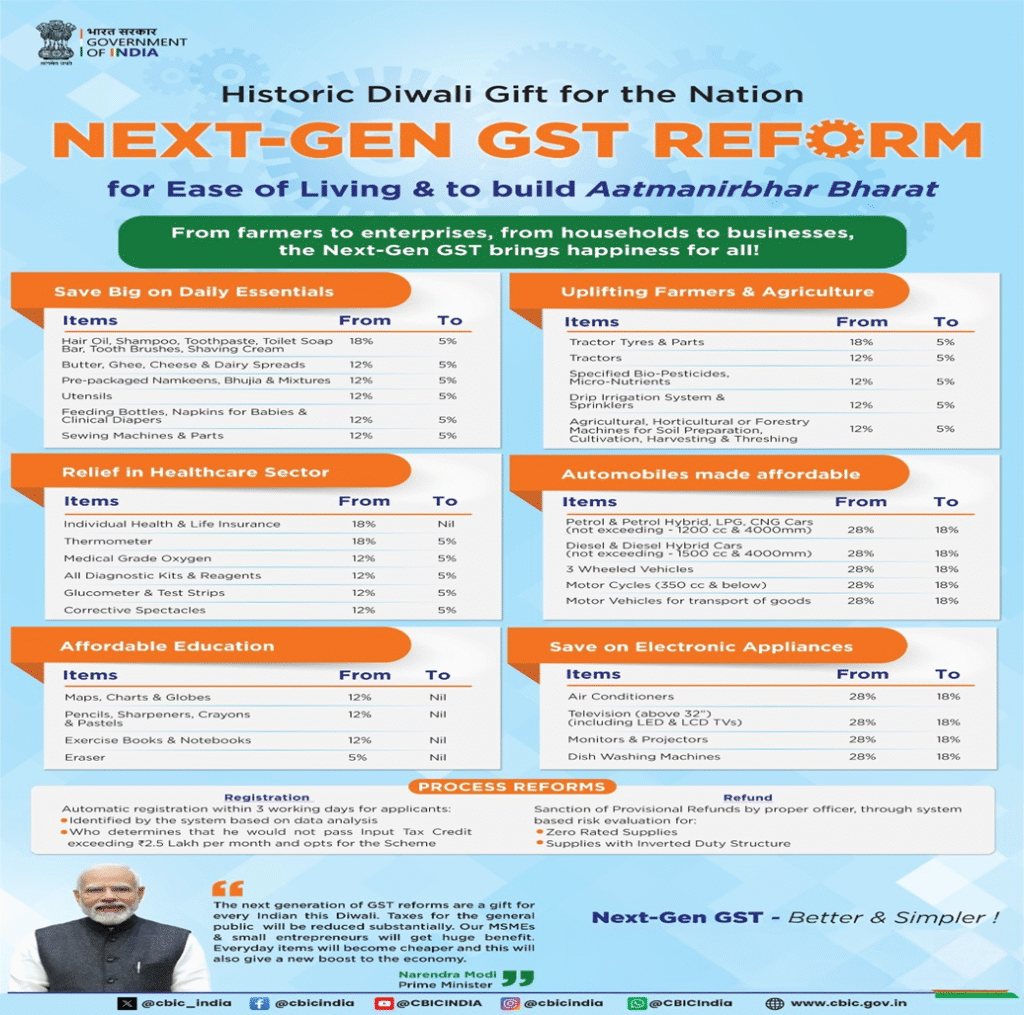
A Simpler, People-Friendly Tax Structure
One of the biggest highlights is the rationalisation of GST slabs.
The earlier complex four-tier structure has been replaced with:
- 5% Merit Rate – for essentials and common-use goods.
- 18% Standard Rate – for the majority of goods and services.
- 40% Special Rate – reserved for luxury and de-merit goods like large cars and certain beverages.
This “Simple Tax” model reduces disputes, simplifies compliance, and most importantly, lowers the cost of living for ordinary citizens.
Major GST Relief Measures for Households
The reforms span across multiple sectors with a clear focus on easing everyday expenses:
1. Insurance for All, Now GST-Free
Life insurance and health insurance (including reinsurance) have been made completely GST exempt.
This reduces policy costs and encourages wider financial protection.
👉 Read official update: PIB Press Release – GST Council Decisions and our article GST Exemption on Life and Health Insurance to know on this
2. Affordable Healthcare
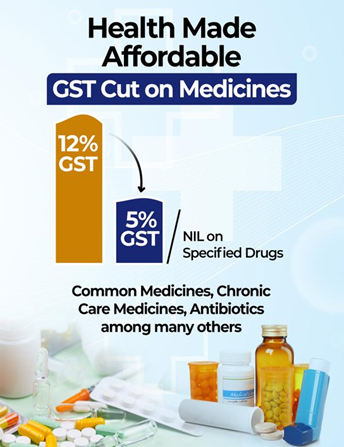
- 33 life-saving medicines and 3 critical cancer & rare disease drugs are now fully exempt.
- All other medicines see GST reduced from 12% to 5%.
- Medical devices like glucometers, bandages, and diagnostic kits will attract only 5% GST.


3. Cheaper Food & Essentials
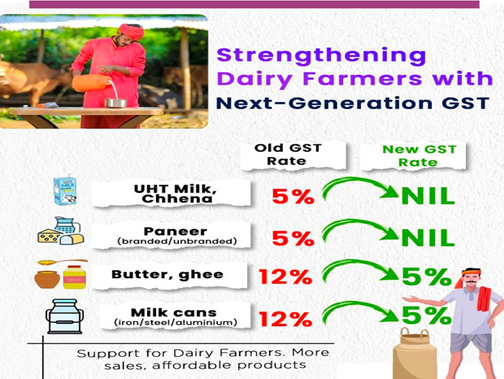
- UHT milk, paneer, and all Indian breads (roti, paratha, etc.) – now fully exempt.
- Packaged foods such as noodles, sauces, coffee, chocolates, and namkeens – reduced to 5%.
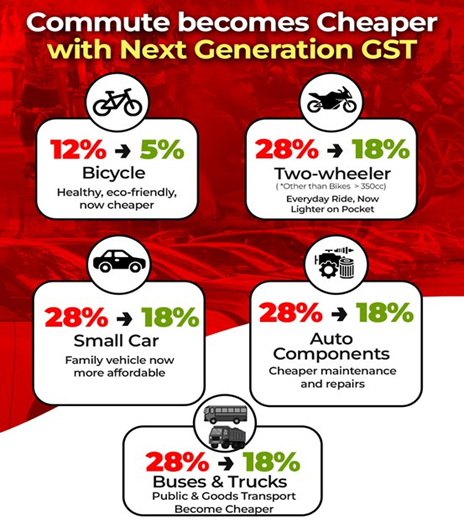
- Toiletries & essentials like toilet soap bars, hair oil, toothpaste, and bicycles – now taxed at just 5%.

4. Relief for Farmers and Workers
- GST on agricultural machinery like tractors, threshers, and drip irrigation systems cut from 12% to 5%.
- Labour-intensive sectors (handicrafts, leather goods, marble blocks) also brought under 5% GST.
5. Mobility Made Cheaper
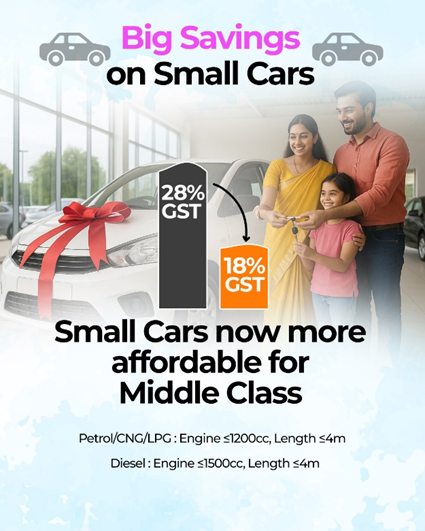
- GST on small cars, motorcycles up to 350cc, buses, trucks, and ambulances reduced from 28% to 18%.
- Three-wheelers also brought down to 18%, directly benefiting public transport users.
Long-Term Impact on the Common Man
The decisions taken in the 56th GST Council meeting are not short-term adjustments—they are structural reforms aimed at transforming how citizens experience taxation in daily life.
✅ Lower Household Expenditure
By reducing GST on essentials such as food staples, toiletries, and bicycles, families will see a direct reduction in their monthly grocery and utility bills.
✅ Higher Disposable Income for the Middle Class
With more goods now under the 5% bracket, middle-class households will retain more income. This can be redirected towards savings, education, or investments.
✅ Universal Access to Healthcare and Insurance
GST exemption on life and health insurance, along with sharp cuts on medicines and medical devices, makes quality healthcare affordable.
This reform benefits senior citizens, low-income families, and patients with chronic illnesses.
✅ Support for Farmers and Small Enterprises
Reducing GST on agricultural machinery and labour-intensive goods lowers input costs for producers and traders.
This strengthens the rural economy and empowers small businesses to grow without tax burden.
Putting Citizens First, Powering the Economy
The reforms echo the government’s vision of building a simpler, transparent, and equitable GST system—one that serves both citizens and businesses.
As Smt. Nirmala Sitharaman often highlights on her official X handle, the core objective is ease of living for citizens and ease of doing business for entrepreneurs.
Beyond simplification, these changes will have a direct financial impact:
- Lower GST rates leave more money in households’ hands.
- Higher disposable income leads to greater consumer spending.
- Increased spending boosts demand, production, and small businesses.
This creates a virtuous cycle that strengthens India’s consumption-driven economy.
Conclusion
The GST relief package of September 2025 is a transformative step that touches almost every Indian household.
By making food, healthcare, insurance, transport, and daily-use items more affordable, the reforms put more money in citizens’ hands while ensuring a stronger, fairer tax system.
✅ GST has truly moved closer to its vision of being a Good and Simple Tax—uplifting the common man while powering India’s economic engine.
Leave A Comment