
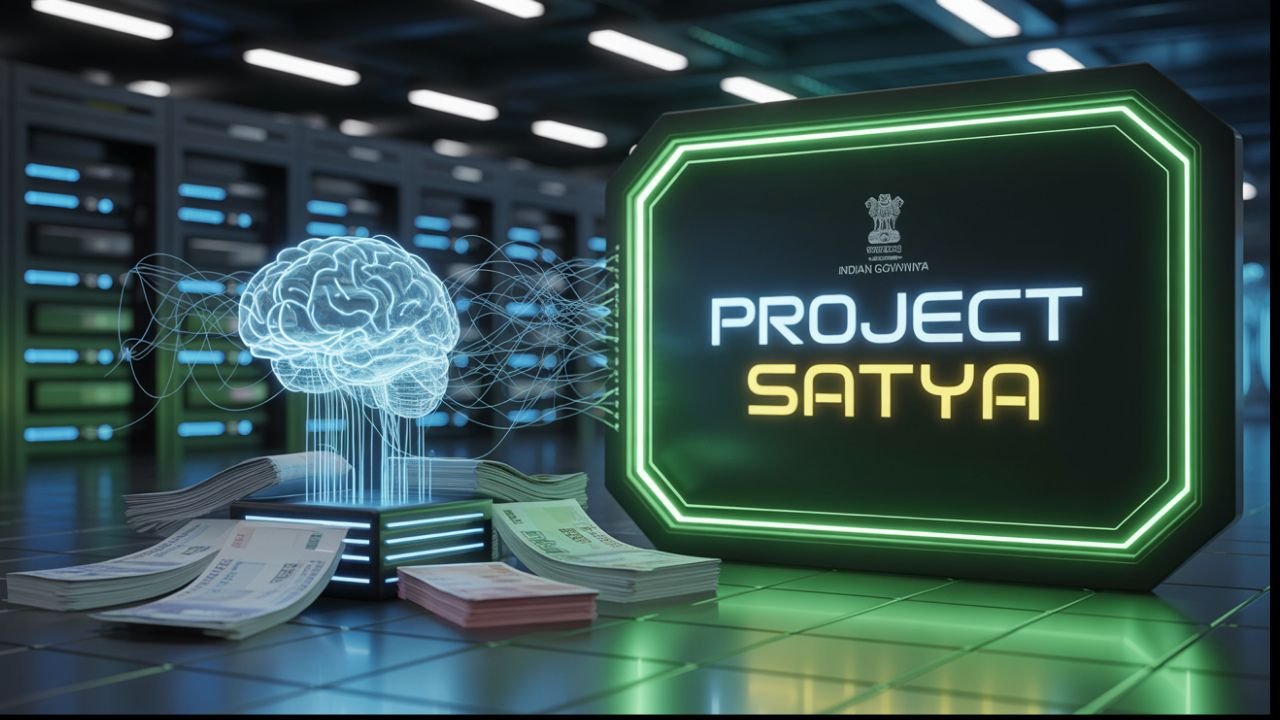
The Indian Income Tax Department has taken a major step toward technology-driven governance by launching Project Satya, an artificial intelligence (AI) portal designed to detect and track tax evasion. Developed with the support of the Defense Research and Development Organization (DRDO) and the Central Board of Direct Taxes (CBDT), this portal marks a new era of digital tax enforcement in India.
What is Project Satya?
Project Satya is an AI-based investigative platform that enables tax authorities to connect digital footprints with financial records. Instead of relying only on manual investigations, the system uses big data analytics, call data records, app usage patterns, and location tracking to expose hidden income and unreported transactions.
Some of its core features include:
- Call Data Analysis – Detects unusual call patterns such as “sandwich calls,” odd-hour communications, and last calls of the day that may indicate secret dealings.
- App Usage Monitoring – Tracks usage of popular messaging apps like WhatsApp, Telegram, and Signal, often used to share financial information discreetly.
- OTP & Digital Transfers – Identifies suspicious OTP-based financial transactions.
- Location & IP Tracking – Uses mobile tower data and IP addresses to verify a person’s real location against declared activities.
- Faster Investigations – Automated AI tools cut down work that earlier took hours into just a few minutes.
👉 Source: NDTV Profit Report on Project Satya
Why is Project Satya Important?
Tax evasion has long been a challenge in India, with evaders relying on cash dealings, proxy accounts, and encrypted apps. Project Satya acts as a digital watchdog, making it much harder for individuals or businesses to hide their real financial activities.
With Bengaluru’s Investigation Wing already using it, the Income Tax Department plans to expand the system across the country in the coming months.
Privacy Concerns: Could Project Satya Affect the Aam Aadmi?
While Project Satya strengthens tax enforcement, it also raises serious privacy concerns. Since it involves scanning call records, app usage, OTP transfers, and even location data, experts warn about the risk of misuse if strict safeguards are not followed.
Why This Raises Concerns
- Overreach Risk – Even ordinary citizens who have nothing to hide may find their digital behavior flagged by AI systems.
- False Positives – Normal transactions, frequent small digital payments, or late-night calls could mistakenly be treated as “suspicious.”
- Data Security – With so much personal data being collected, leaks or hacking could compromise citizens’ privacy.
- Chilling Effect – The feeling of being constantly monitored may affect how people communicate and conduct daily business.
Impact on the Common Man (Aam Aadmi)
For the average taxpayer—whether salaried employees, small traders, freelancers, or gig workers—this system could feel intrusive:
- Unexplained cash deposits or delays in filing ITR may trigger red flags.
- Business discussions on WhatsApp or Telegram might get misinterpreted as shady dealings.
- Students or migrants making frequent digital transfers could attract unwanted scrutiny.
Constitutional Safeguard
This is where the right to privacy, guaranteed under Article 21 of the Indian Constitution, becomes crucial. In the landmark K.S. Puttaswamy v. Union of India (2017) case, the Supreme Court ruled that any surveillance must:
- Be legal.
- Be necessary in public interest, and
- Be proportionate, ensuring minimal intrusion.
Unless these safeguards are strictly followed, Project Satya—though well-intentioned—risks becoming a threat to the aam aadmi’s privacy and freedom instead of just a weapon against tax fraud.
📖 Reference: Supreme Court Judgment – Right to Privacy
What It Means for Taxpayers
For honest taxpayers, Project Satya is not a threat but a step toward fairer taxation. It ensures that those hiding income through illegal means are identified, making compliance easier and rewarding for genuine filers. However, transparency in its use and robust data protection policies will be key to gaining public trust.
Project Satya represents India’s push toward using AI and big data for governance. It is a double-edged sword. It promises faster investigations, stronger compliance, and improved revenue collection. But its success will depend on how well the government balances efficiency with privacy.
As the system expands nationwide, all eyes will be on whether this ambitious project can deliver justice without compromising citizens’ constitutional rights.
Leave A Comment