
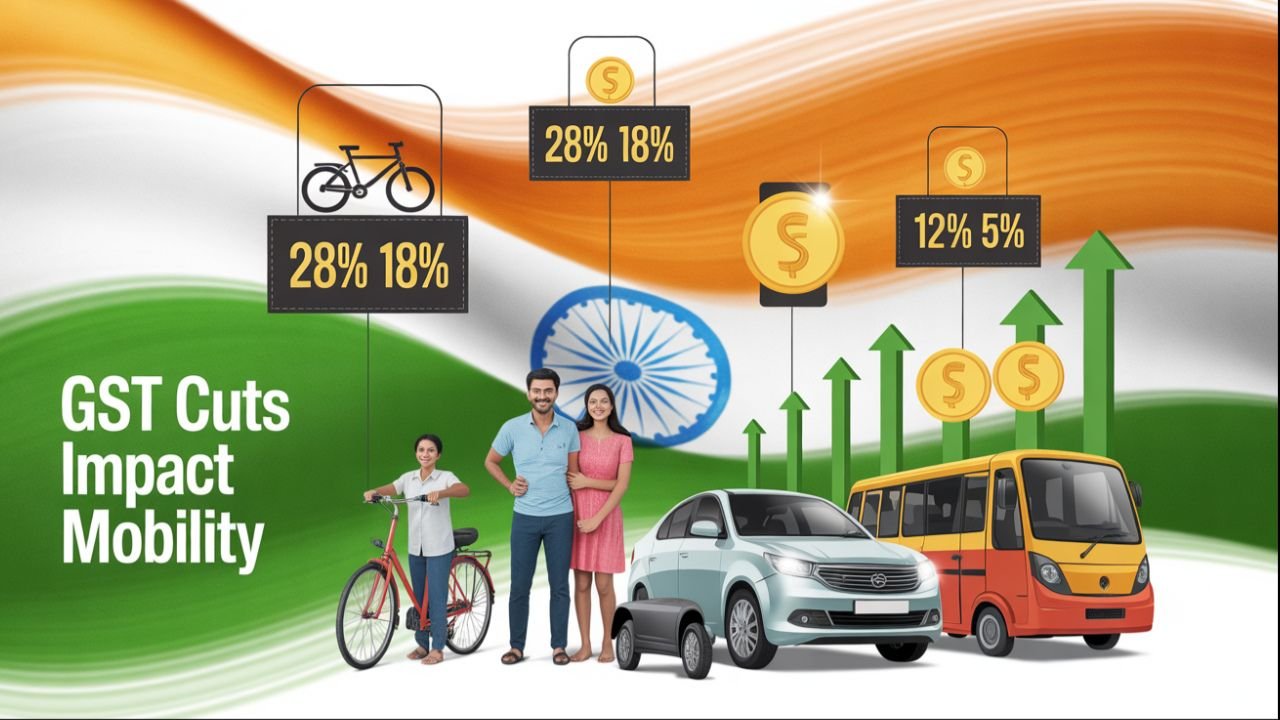
GST Relief on Commute: Making Mobility Affordable for Every Indian
GST Relief for Mobility Sector in 2025: Mobility is at the heart of daily life—whether it is a student cycling to class, a family buying their first car, or a delivery partner navigating city streets. Recognizing this, the 56th GST Council meeting has delivered a major relief package for commuters by slashing GST rates on bicycles, two-wheelers, small cars, three-wheelers, buses, and even auto components.
This reform is not just about cheaper vehicles—it is about empowering the common man with affordable transport and fueling India’s consumption-driven growth.
🚗 GST Cuts That Put More Money in People’s Pockets
The new GST structure has brought substantial rate reductions across the mobility sector:
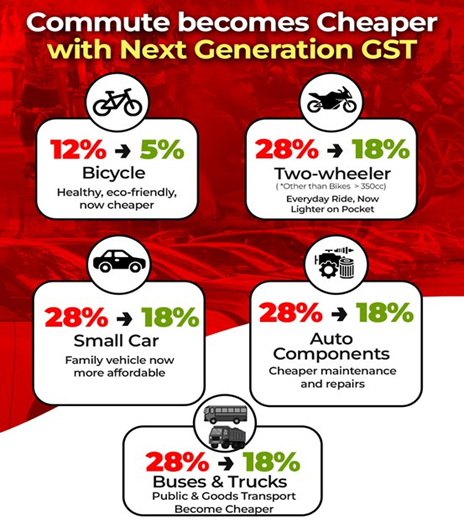
- Two-Wheelers (≤ 350cc): Reduced from 28% → 18% – making motorcycles and scooters more affordable for families, students, and gig workers.
- Small Cars: Petrol/CNG/LPG (≤1200cc, ≤4m length) & Diesel (≤1500cc, ≤4m length) now at 18% GST instead of 28%, helping the middle class own their dream car.
- Bicycles and Parts: Reduced from 12% → 5%, promoting eco-friendly, low-cost transport options for students, workers, and rural households.
- Three-Wheelers: Reduced from 28% → 18%, lowering costs for everyday travel and goods transport.
- Buses and Trucks: Reduced from 28% → 18%, making public and goods transport more economical.
- Auto Components: Reduced from 28% → 18%, cutting down repair and maintenance expenses.
💡 Why This Matters for the Common Man
- Affordable Daily Commute – Families, workers, and students will save significantly on both purchase and running costs.
- Boost to Gig Economy – Delivery agents, cab drivers, and ride-hailing partners will spend less on vehicles and maintenance.
- Encouraging Green Transport – Lower GST on bicycles promotes sustainable and eco-friendly travel.
- Relief for Small Businesses – Cheaper three-wheelers, trucks, and buses reduce logistics costs for MSMEs and traders.
🌍 A Citizen-First, Growth-Oriented Approach
These measures reflect the government’s citizen-first vision of GST. As Finance Minister Smt. Nirmala Sitharaman emphasizes, reforms are aimed at ensuring ease of living for citizens and ease of doing business for entrepreneurs.
By putting more money in people’s pockets, GST cuts will:
- Encourage higher consumer spending
- Create demand for vehicles and mobility services
- Reduce logistics costs for businesses
- Boost India’s economic growth through a virtuous cycle of consumption
❓ Frequently Asked Questions (FAQs) on GST Relief for Commute
Q1. What is the new GST rate on two-wheelers in India?
➡️ 18% (earlier 28%) for motorcycles and scooters up to 350cc.
Q2. Are bicycles exempt from GST?
➡️ No, but the rate has been reduced from 12% to 5%.
Q3. How much GST do I need to pay on small cars after the reform?
➡️ 18% (earlier 28%) for petrol/CNG/LPG cars ≤1200cc and diesel cars ≤1500cc (both ≤4m length).
Q4. Has GST on three-wheelers been reduced?
➡️ Yes, from 28% to 18%.
Q5. What is the GST on buses and trucks under the new rules?
➡️ 18% instead of 28%.
Q6. Why was GST reduced on auto components?
➡️ To cut vehicle repair and maintenance costs—now at 18% instead of 28%.
Q7. How will GST relief on commute boost the economy?
➡️ Lower transport costs = more disposable income, higher demand, and reduced logistics expenses—fueling economic growth.
✅ Conclusion
The GST relief on commute is more than a tax adjustment—it is a step towards affordable, inclusive, and sustainable mobility for India. By reducing the cost of bicycles, two-wheelers, small cars, three-wheelers, and public transport, the government has ensured that mobility is no longer a financial burden but a driver of opportunity and growth.
With this reform, every ride—be it on a bicycle, bike, car, or bus—becomes not just cheaper, but a part of India’s journey towards a stronger economy and better quality of life.
Leave A Comment